How Long Does It Take to Sand a Wooden Floor?
If you’re planning to restore your wooden flooring, one of the first questions you’ll ask is: How long does it take to sand a wooden floor? Can I be in the property during the sanding process? Should I sand the floors myself or hire a professional?
The answer depends on several factors:
- The size of the room
- The condition of the floor
- The type of wood
- The final finish you are looking to achieve
At The London Floor Sanders, we provide professional floor sanding in London with efficient turnaround times and exceptional results. We ensure the project is completed properly, professionally and perfectly the first-time round! The best way to review our work is check out videos of our technicians doing what they do best – this can be viewed on our Instagram @TheLondonFloorSanders.
Average Floor Sanding Times
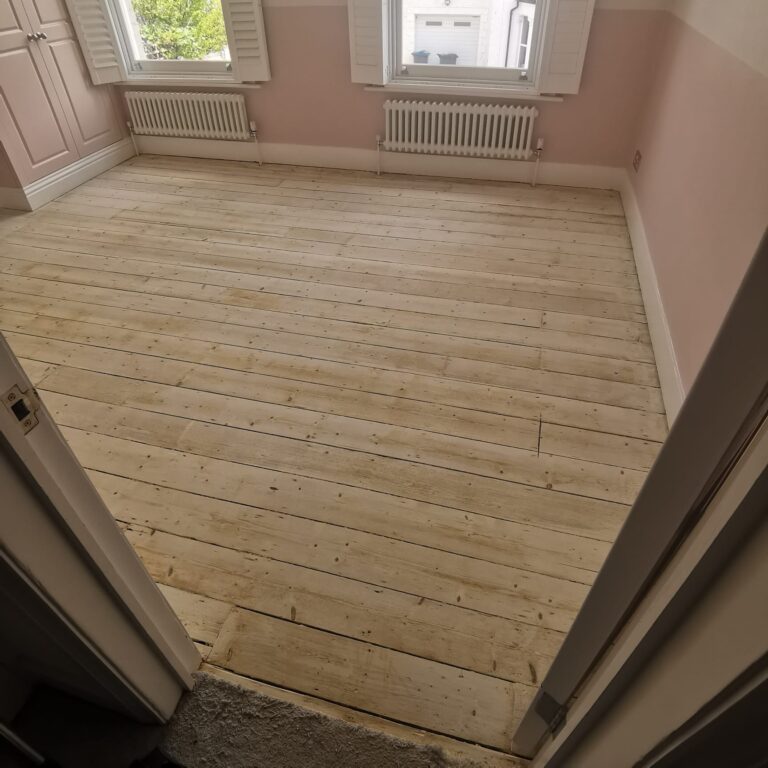
The time required to sand a wooden floor varies depending on the project type. Have the floors been sanded before – if so the overall project won’t be too long. If you have just lifted up the carpets, the floorboards are likely pine wood and will not have been sanded before. If the flooring type is oak, the time taken to sand the wood is often less than when sanding a pine floor. Assuming the floors have been sanded before, below are some timelines:
- Small room (10–15m²): 1-2 days
- Medium room (15–30m²): approx. 2-3 days
- Large room (30–50m²): approx. 3-4 days
- Whole house: approx. 5-6 days
This assumes sanding and sealing with a clear lacquer. If you wanted to alter the colour of the wood, you would need to apply an oil or stain. This on average adds an extra 20-25% times.
What Affects the Time Needed to Sand a Floor?
- Size of the Floor
Larger rooms naturally require more time. Open-plan spaces are often quicker to sand than homes with multiple small rooms, hallways, or awkward layouts.
- Condition of the Wood
Floors with deep scratches, old varnish, paint, stains, or uneven boards require additional sanding passes to achieve a smooth finish. If repairs are needed this will also increase the project timeline.
- Type of Wooden Flooring
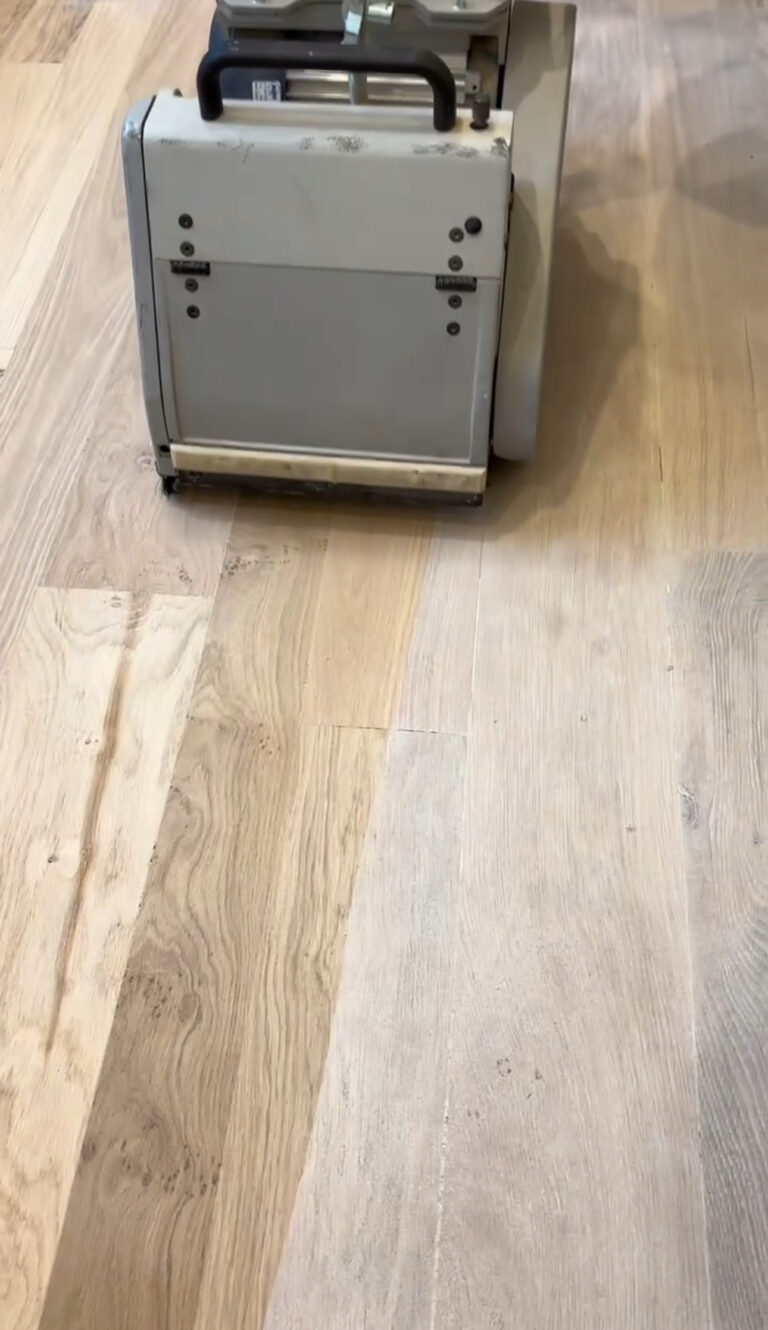
Different flooring materials (i.e. oak or pine) require different sanding techniques. Oak flooring is flatter and more even than pine wood – this means oak flooring is quicker to sand than pine. Pine wood is often uneven which means the initial sanding runs are trying to flatten and level the wood, we then commence the same sanding sequence as we would for oak flooring. Parquet flooring is unique due to the layout of the wood – often a zigzag layout. With this, if you ran a heavy-duty belt sanding machine against the grain of the wood it would leave behind deep scratches running in the opposite direction of the zig zag parquet pattern. Therefore, for parquet flooring you have to use a combination of machines: heavy duty belt sanders (to strip the previous sealant) and then a finishing sander (to remove the scratches created by the heavy-duty belt sander).
- Repairs During the Sanding
Loose floorboards, damaged timber, gaps between boards, and water damage should be repaired before sanding begins. Completing these repairs ensures a longer-lasting and more attractive finish.
- Finishing the Floor
Once sanding is complete, your floor should be protected with a high-quality stain, lacquer oil. Drying and curing times vary depending on the product used and environmental conditions. On average, lacquers take 2.5 hours to dry between coats.
Professional Floor Sanding vs DIY
While DIY floor sanding may seem like a cost-saving option, professional contractors deliver faster, cleaner, and more consistent results. Industrial-grade sanding machines remove old finishes efficiently while producing a much smoother surface than most rental equipment. This in turn means that your flooring will perform better over the coming years – if the flooring is not sanded properly, the stain, lacquer or oil will not perform as well as it can.
At London Floor Sanders, we use modern dust-free floor sanding systems that minimise airborne dust and help keep your home cleaner throughout the restoration process.
Benefits of Professional Floor Sanding
Professional wood floor sanding offers many advantages:
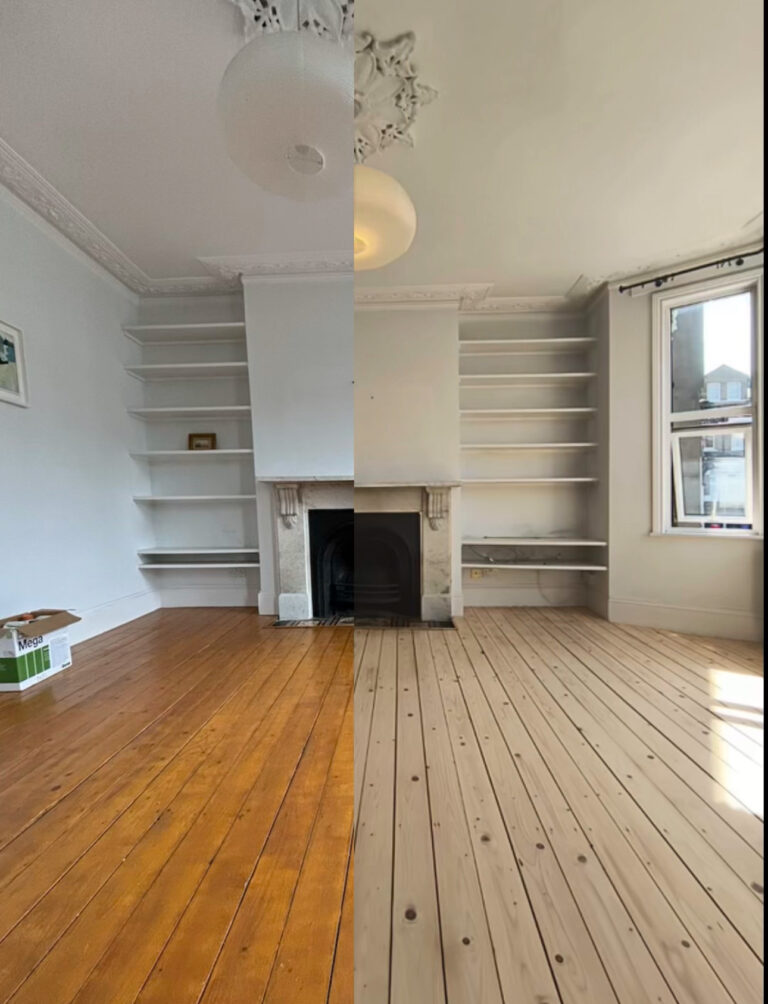
- Restores the natural beauty of timber flooring.
- Removes scratches, dents, stains, and old finishes.
- Extends the lifespan of your wooden floors.
- Improves the appearance and value of your property.
- Creates a smooth, durable surface ready for sealing or staining.
- Uses advanced dust extraction for a cleaner working environment.
How to Prepare Your Home
To help the project run smoothly:
- Remove furniture and rugs from the room
- Take down fragile wall decorations
- Keep pets and children away until the finish has fully cured
Why Choose London Floor Sanders?
At London Floor Sanders, we specialise in professional dust free wooden floor restoration across London. Our experienced team hold the esteemed Bona certification and use industry-leading equipment and premium finishes to deliver beautiful, long-lasting results with minimal disruption.
Whether you need a single room restored or a complete property renovation, we provide reliable workmanship, competitive pricing, and outstanding customer service.
Get a Free Floor Sanding Quote
If you’re looking for trusted floor sanding services in London, London Floor Sanders is here to help. Contact our team today for a free, no-obligation quotation and discover how we can transform your wooden floors into a feature you’ll enjoy for years to come.